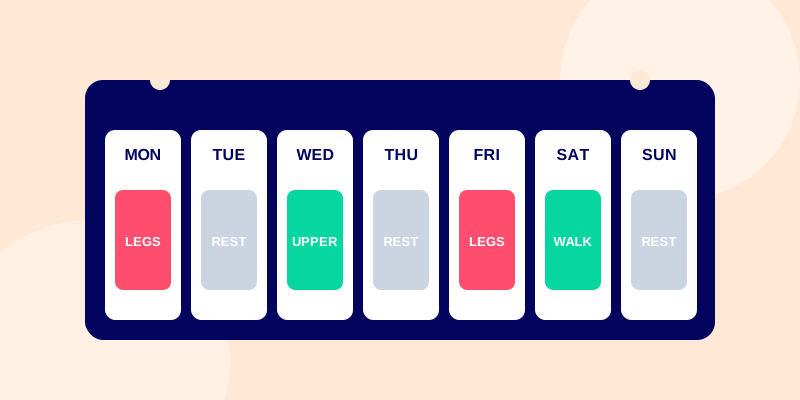
You can build real lower-body strength at home with a small space and very little equipment. The challenge is keeping workouts progressive when you cannot simply add another plate to a bar. These ten strategies help you keep improving without a gym.
1. Train the main patterns every week
Cover a squat, a hip hinge, a single-leg exercise and a hip abduction move each week. For example: goblet or box squats, single-leg Romanian deadlifts, reverse lunges and banded side steps. A balanced mix trains the glutes, quads, hamstrings and the smaller hip muscles.
2. Schedule it like an appointment
Consistency matters more than any single workout. Put two or three short sessions in your calendar on non-consecutive days. Even 25–30 minutes is enough for meaningful work when the session is focused.
3. Use single-leg exercises to multiply resistance
Shifting most of your body weight onto one leg makes bodyweight exercises much harder. Bulgarian split squats with the back foot on a sofa or step, single-leg glute bridges and step-ups are effective substitutes for heavier barbell work.
4. Slow the tempo
Taking three to four seconds to lower into each rep keeps the muscles working longer. Adding a one- or two-second pause at the hardest point, such as the bottom of a split squat, makes light loads feel heavy.
5. Add a few pieces of kit
Loop bands, a long resistance band, an adjustable dumbbell or a single kettlebell take up little space and widen your options considerably. A sturdy step or low bench gives you step-ups, elevated bridges and split squats.
6. Track your sessions
Write down the exercise, reps, sets and any load. When you can complete all your sets at the top of the rep range with good form, increase the difficulty slightly next time. A notebook or a phone note is enough.
7. Make each rep count
Use a full range of motion you can control, keep the knees tracking over the toes and finish hinges by squeezing the glutes rather than leaning back. Quality reps beat high numbers of sloppy ones. Our form cue guide covers each exercise.
8. Use mechanical drop sets and higher reps
Without heavy weights, you can finish a set close to fatigue by moving from a harder variation to an easier one, for example single-leg bridges until form slips, then double-leg bridges. Higher-rep sets taken close to fatigue can also build muscle, as long as form stays solid.
9. Respect recovery
Leave about 48 hours between demanding lower-body sessions, sleep well and keep rest days active with walks or mobility work. See our recovery best practices for details.
10. Stay safe at home
- Clear the area around you and use a non-slip mat.
- Check that steps, benches and chairs are stable before stepping on them.
- Inspect resistance bands for tears and anchor them securely.
- Wear supportive shoes for standing exercises if your floor is slippery.
- Stop if you feel sharp or joint pain.
A sample home week
Day 1: goblet squat, single-leg Romanian deadlift, reverse lunge, banded side steps. Day 2: walk or mobility. Day 3: rest or upper body. Day 4: Bulgarian split squat, single-leg glute bridge, step-up, side-lying leg raise. Days 5–7: walks, rest and one optional full-body session.
Start with two or three sets of each exercise and adjust to how you recover. If a session leaves you exhausted for days, reduce the number of sets. If it feels easy, add a set or move to a harder variation. Small, steady improvements over months add up, and a routine you enjoy is the one you will keep doing.
This article is general educational information, not medical or personal-training advice. If you have an injury, a health condition, are pregnant or are new to exercise, check with a doctor or a qualified professional first. See our disclaimer.